Building Envelope
Stucco is not what waterproofs the home
The concealed weather-resistive layers that manage water before the stucco finish is applied.
September 2, 2026 · 4 min read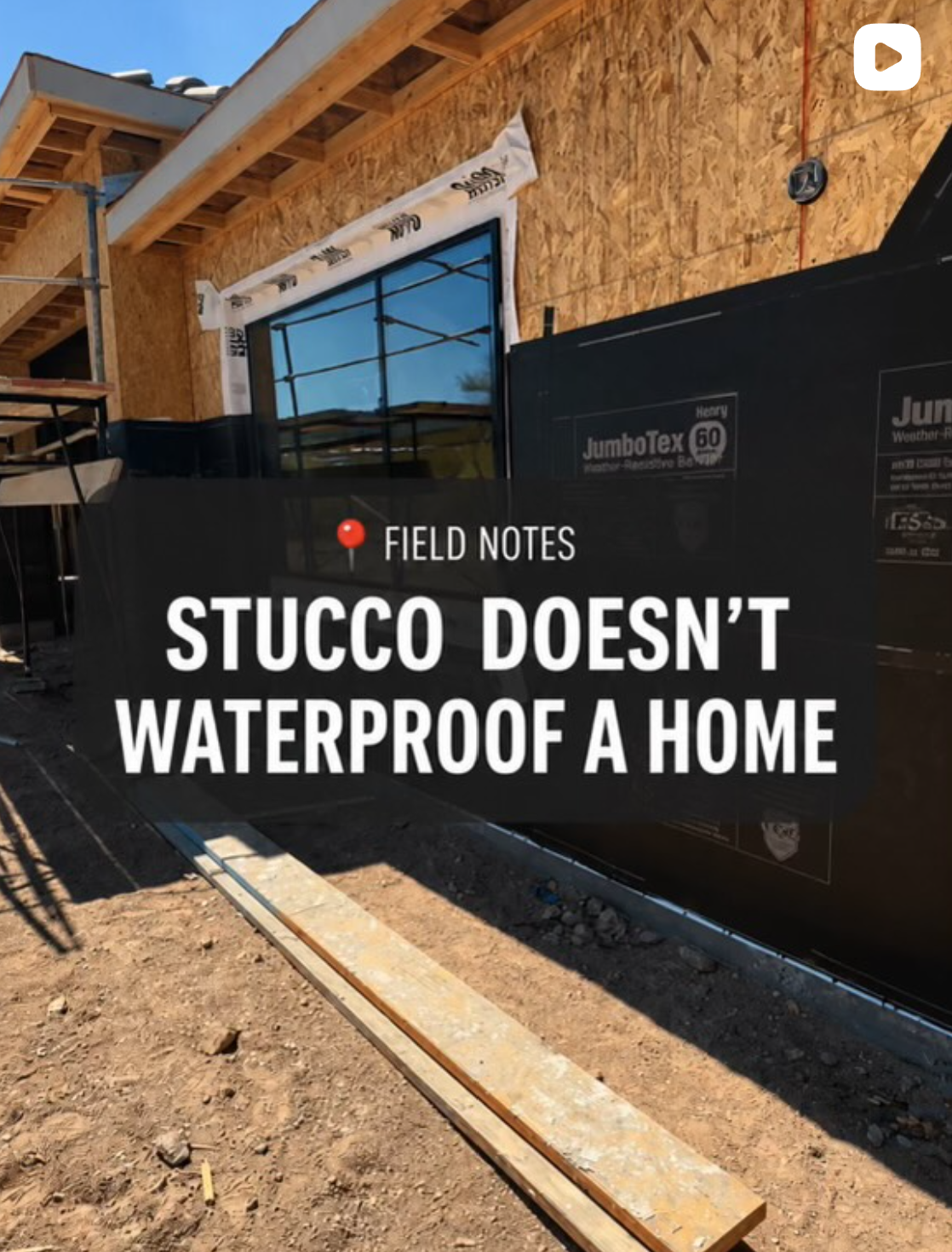
The finish is not the drainage plane
Stucco is durable, but it is not the layer that keeps every drop of water out. The weather-resistive barrier behind it is designed to shed incidental moisture safely down and away from the wall assembly.
Every transition has to work together
Window flashing, penetrations, laps, corners, and roof-to-wall conditions interrupt the barrier. Each detail must direct water onto the layer below it rather than behind it.
The bottom needs a way to drain
The weep screed creates the exit point at the base of the wall. Covering it, burying it, or reducing the required clearance can compromise the drainage strategy.
Pro Tip
Inspect the weather-resistive barrier before lath and stucco conceal it. Look for shingle-style laps, repaired tears, integrated flashing, and a clear drainage path.
Why penetrations deserve attention
Windows, doors, vents, pipes, electrical boxes, decks, and roof intersections interrupt the wall assembly. Each condition needs a compatible flashing and water-management detail based on the approved system and local requirements.
Who should verify the assembly
The builder and appropriate building-envelope professionals should confirm the specified products, sequencing, clearances, and inspections. Manufacturer instructions and local code requirements take priority over a generic detail.
FROM THE FIELD
See the story behind the note.
Follow Frame to Finish for more job-site observations and practical design guidance.