Design + Selections
Cabinet hardware size guide: choosing pulls that fit
A practical guide to cabinet pull sizes by drawer width, appliance pulls, placement, and the center-to-center measurement to check before ordering.
September 27, 2026 · 3 min read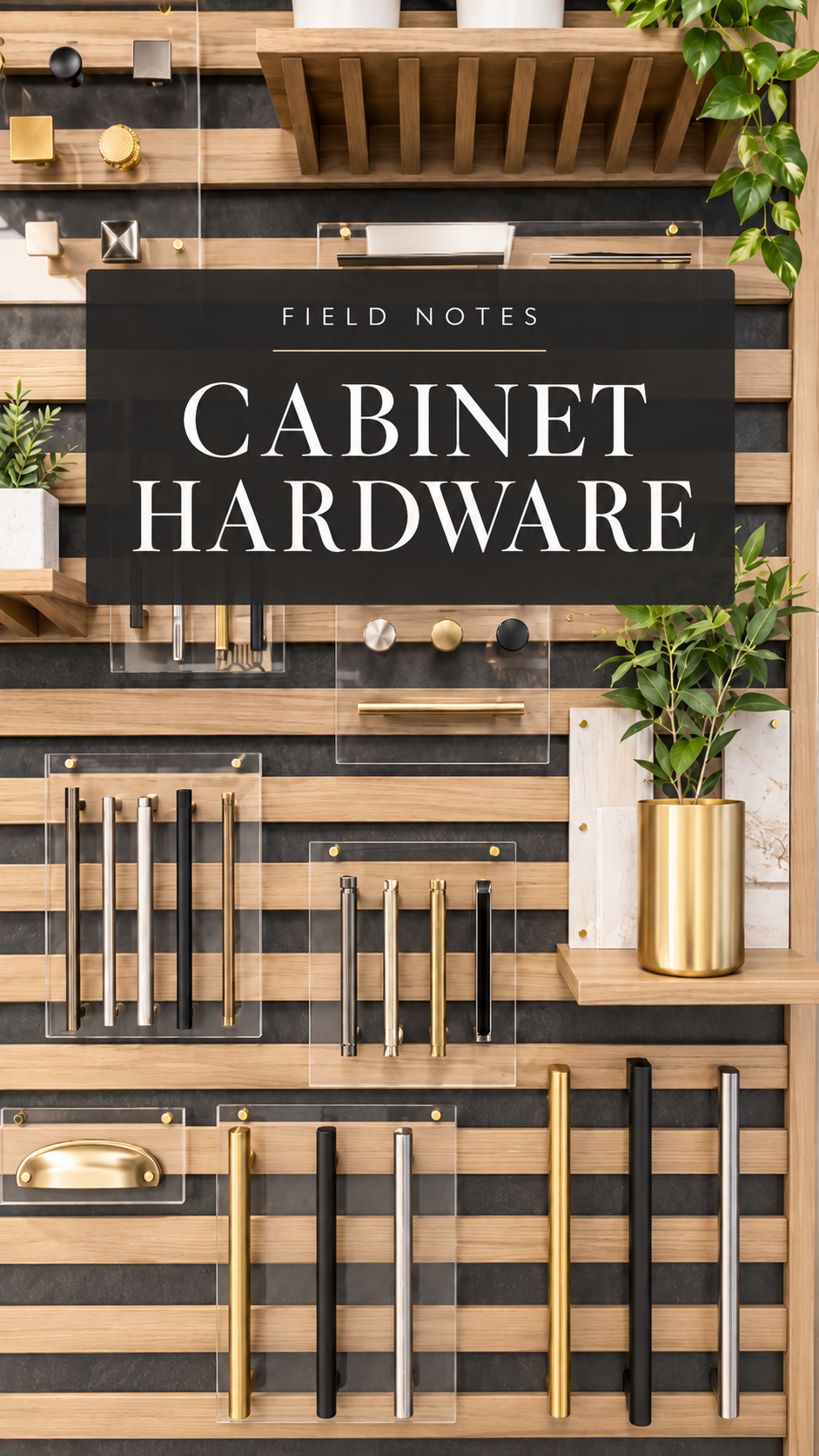
Start with the drawer width
Hardware is the jewelry of a kitchen, but proportion does as much work as finish. A useful starting point is a pull around one third of the drawer width. That is a visual guide, not a fixed rule: drawer style, the surrounding cabinetry, and how the pull feels in your hand can change the best choice.
Drawers up to 12 inches
Try a single knob or a 3- to 4-inch pull. On a narrow drawer, check that the hardware leaves enough space around the edges and feels comfortable to grip.
Drawers 12 to 24 inches
A 4- to 8-inch pull is a common starting range. For a 24-inch drawer, an approximately 8-inch pull follows the one-third guide; compare a couple of sizes against the actual drawer front.
Drawers 24 to 36 inches and wider
For drawers between 24 and 36 inches, try an 8- to 12-inch pull. Over 36 inches, consider a pull of 12 inches or longer, or two pulls placed symmetrically. Test whether two pulls make the drawer easy to open from the position you normally use.
Doors and panel appliances
For cabinet doors, a knob or a 3- to 6-inch pull often works; placement is typically about 2 to 3 inches from the opening corner, depending on the door design. Dishwashers and other panel appliances may call for a 12- to 18-inch appliance pull; tall fridge and pantry panels may call for 18 to 30 inches. Confirm the appliance and cabinet maker’s mounting requirements before ordering: panel weight and attachment matter.
💠 Pro Tip: measure the holes
When replacing existing hardware, measure center to center: from the center of one screw hole to the center of the other. Overall pull length is a different dimension. Order one sample first and check its weight, grip, projection, finish, and how it looks on the actual cabinet before you order forty.
FROM THE FIELD
See the story behind the note.
Follow Frame to Finish for more job-site observations and practical design guidance.